ISO Clinic News

The Arctic Exception: How Diet Replaced Sunlight

Across human history there’s a clear pattern: populations living near the equator developed darker skin, in part because the pigment melanin (the brown pigment in skin) reduces the risk of UV-driven damage and helps protect folate, a vitamin important for cell division and pregnancy. As groups moved away from the equator into areas with lower

The Arctic Exception: How Diet Replaced Sunlight Read More »

Rickets, Childbirth, and the Evolution of Light Skin

When we look at the range of human skin tones across the globe we are seeing a long-running evolutionary response to competing needs: protection from ultraviolet (UV) radiation and the requirement to make vitamin D. Vitamin D is a hormone-like nutrient produced in the skin after exposure to ultraviolet B (UVB) light; it helps the

Rickets, Childbirth, and the Evolution of Light Skin Read More »

The Folate Connection: Why Dark Skin Evolved Near the Equator

When we talk about why people who lived near the equator evolved darker skin, the simple answer is not just about avoiding sunburn or skin cancer. It’s about protecting a vital nutrient called folate (also known as folic acid). Folate is a B vitamin that the body needs for DNA repair and cell division; during

The Folate Connection: Why Dark Skin Evolved Near the Equator Read More »

Why Australian Summers Hit Harder: UV Intensity Explained

You have probably noticed that the Australian sun seems to have more bite. A mild, breezy day can leave unprotected skin red even when the temperature feels comfortable. That is because ultraviolet radiation, or UV, cannot be seen or felt, and its strength is not measured by the temperature. Australia receives some of the highest

Why Australian Summers Hit Harder: UV Intensity Explained Read More »

Young woman with red hair and fair skin, a classic feature associated with increased sun UV risk, wearing a blue sleeveless top and smiling slightly, posed against a plain white background.

The Great Australian Sun Trap: Fair Skin in a Harsh Climate

When you look at the history of Australia since 1788, a profound biological experiment has been unfolding. Millions of people with fair skin, primarily of British and Irish descent, relocated to a continent with some of the highest ultraviolet radiation levels on the planet. This mass migration created what scientists call an evolutionary mismatch. Your

The Great Australian Sun Trap: Fair Skin in a Harsh Climate Read More »

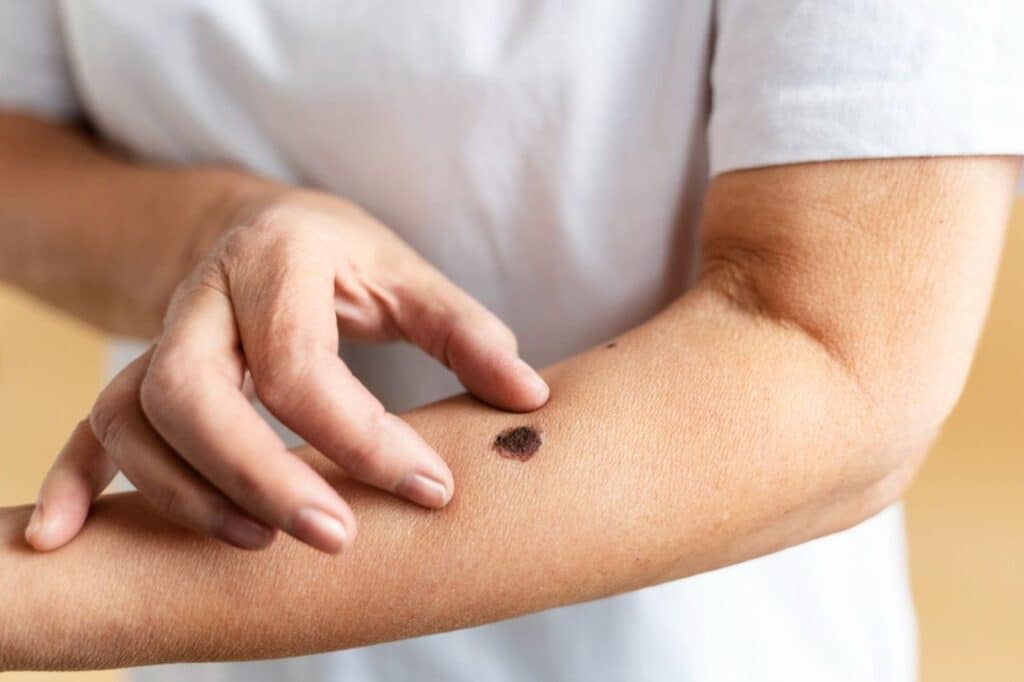
A person touches a large, dark mole on their forearm, inspecting the skin closely as part of their skin cancer prevention routine.

Your Skin Cancer Prevention Plan: Creating a Personalised Strategy with PDT and Fraxel

By now, you have learned about the remarkable potential of Photodynamic Therapy (PDT) and Fraxel 1940 laser technology for preventing skin cancer and maintaining optimal skin health. You understand the science behind these treatments, the evidence for their effectiveness, and the various clinical applications. However, the question that likely remains is: how do I determine

Your Skin Cancer Prevention Plan: Creating a Personalised Strategy with PDT and Fraxel Read More »

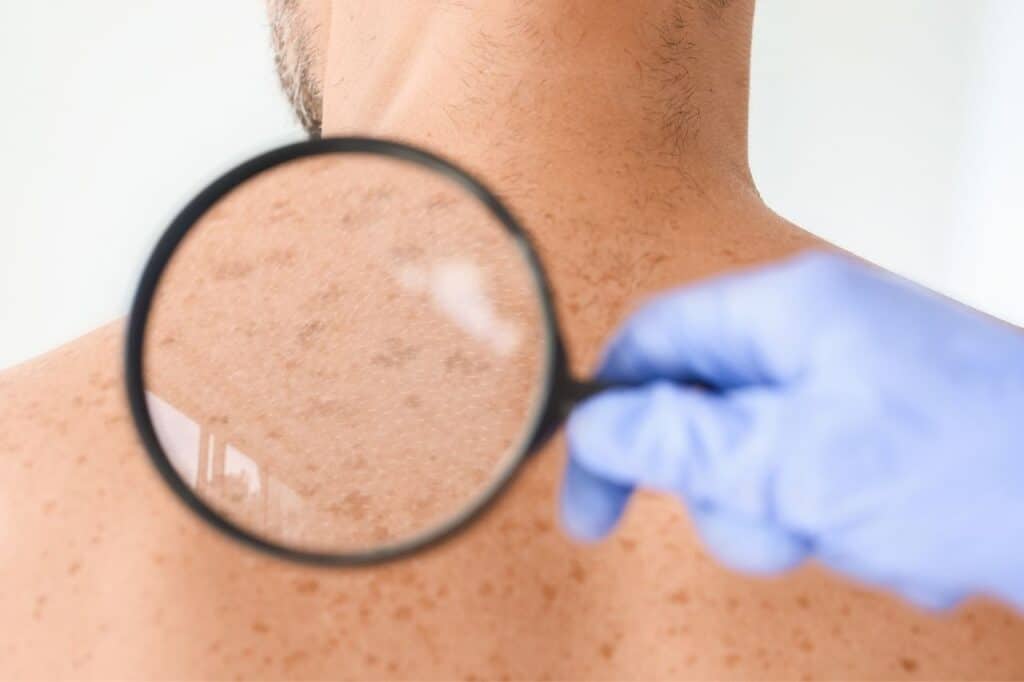
A gloved hand holds a magnifying glass over the skin on a person's back, showing multiple dark spots or moles—an important step in skin cancer prevention and monitoring for signs of extensive photodamage.

Treating Extensive Photodamage: Comprehensive Skin Cancer Prevention Strategy

For many Australians, particularly those who have spent decades working outdoors or enjoying the sun, the cumulative effects of UV radiation have resulted in extensive photodamage affecting large areas of the skin. This condition, characterised by widespread actinic keratoses, dyspigmentation, wrinkles, and laxity, represents a significant risk factor for the development of multiple skin cancers.

Treating Extensive Photodamage: Comprehensive Skin Cancer Prevention Strategy Read More »

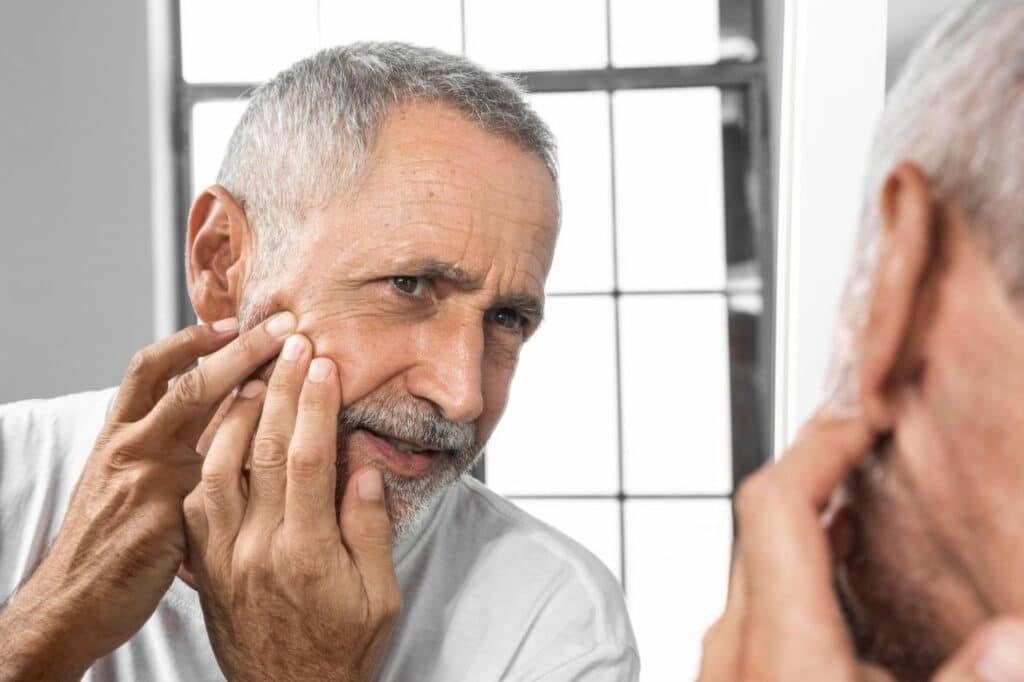
An older man with gray hair examines his cheek closely in a bathroom mirror, touching his face with his fingers as he inspects for lack-of-collagen-causing-dry-skin and increased risk of photo damaged skin leading to skin cancer.

Photodynamic Therapy and Collagen Remodelling: Rebuilding Healthy Skin

When we think about skin cancer prevention, we often focus on the elimination of abnormal cells and the prevention of malignant transformation. However, there is another crucial dimension to skin health that is equally important: the quality and integrity of the skin’s structural components. Collagen, the most abundant protein in the skin, provides the structural

Photodynamic Therapy and Collagen Remodelling: Rebuilding Healthy Skin Read More »