For decades, our approach to skin cancer prevention has been largely passive: we advised patients to use sunscreen, avoid sun exposure, and seek early treatment when suspicious lesions appeared. Whilst these strategies remain important, recent research has revealed a remarkable new dimension to skin cancer prevention that challenges our traditional understanding. Fractional laser technology, particularly the non ablative 1940nm Fraxel laser, does not merely remove damaged tissue; it fundamentally alters the skin’s immune response in ways that help prevent the development of future skin cancers. This discovery represents a paradigm shift in dermatology, and as a candidate for the Master of Skin Cancer Medicine at the University of Queensland, I, Dr. Tina Fang, have devoted significant research to understanding these immunological mechanisms and their clinical implications.
This blog post will explore the traditional view of skin cancer prevention, explain the new understanding of skin immunity, and discuss how fractional laser technology is revolutionising our approach to cancer prevention.
Traditional View of Skin Cancer Prevention
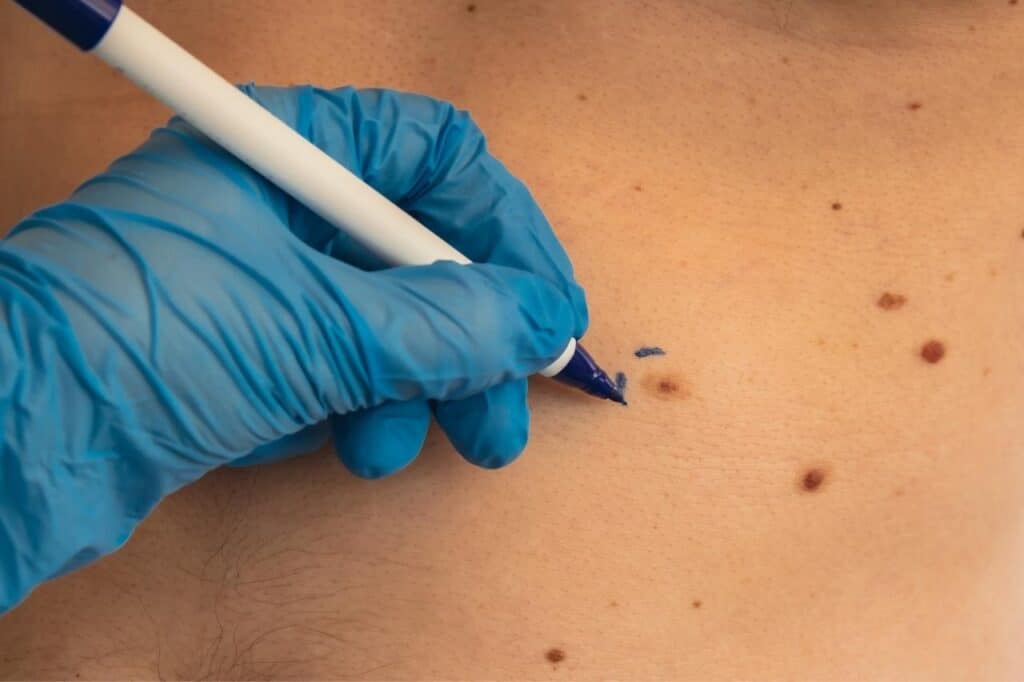
Historically, skin cancer prevention has been conceptualised as a relatively straightforward process: reduce UV exposure, and you reduce the risk of skin cancer. This understanding led to public health campaigns emphasising sun protection, the development of sunscreen products, and the recommendation that individuals with significant sun exposure or a personal history of skin cancer undergo regular skin checks for early detection and treatment.
Whilst this approach has been effective in reducing skin cancer mortality, it has limitations. Many individuals who follow sun protection recommendations still develop skin cancers, suggesting that additional factors beyond UV exposure are at play. Furthermore, the focus on early detection, whilst important, is essentially a reactive approach that addresses cancer after it has already begun to develop.
The New Understanding of Skin Immunity
Recent advances in immunology and laser dermatology have revealed that the skin possesses a sophisticated immune system that plays a crucial role in preventing the development of cancer. This immune system includes specialised cells such as Langerhans cells, which are responsible for recognising and presenting antigens (foreign substances) to the immune system, as well as T lymphocytes and other immune cells that can identify and eliminate abnormal cells before they develop into cancer.
Photodamaged skin, which is characterised by years of UV exposure, exhibits alterations in this immune system. The chronic inflammation induced by UV radiation can actually impair the skin’s ability to recognise and eliminate abnormal cells, creating an environment that is permissive for cancer development. This understanding suggests that simply removing photodamaged tissue may not be sufficient to prevent cancer; we must also restore the skin’s immune function.
How Fractional Laser Modifies Immune Response
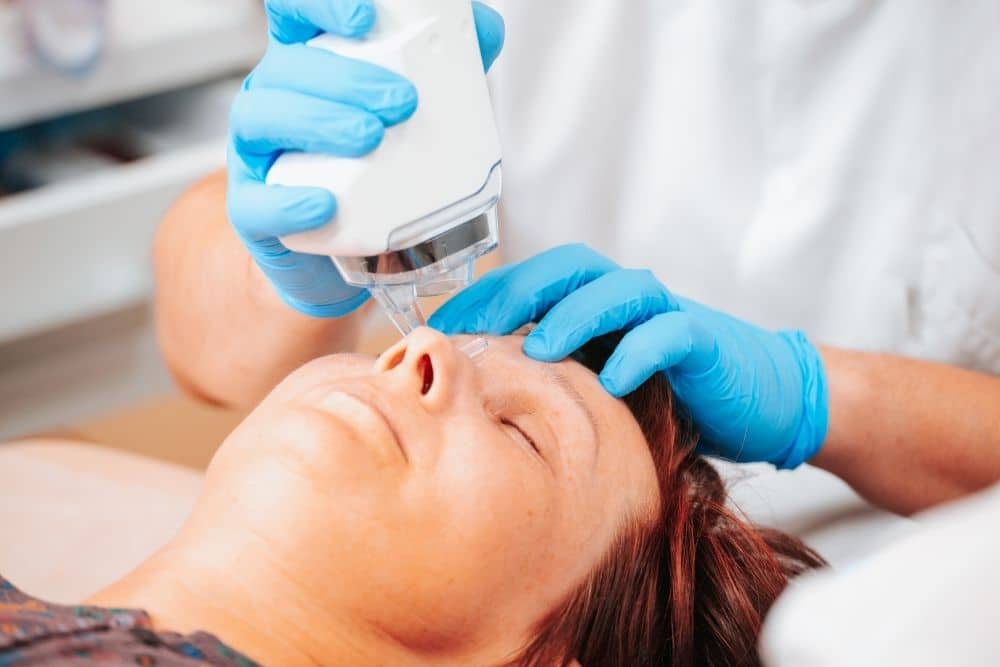
This is where fractional laser technology becomes revolutionary. Research has shown that non ablative fractional laser treatment induces changes in the skin’s immune response that extend far beyond simple tissue removal. The controlled thermal damage created by the fractional laser triggers a wound healing response that includes the recruitment and activation of immune cells.
Recent studies have demonstrated that fractional laser treatment is associated with a 50% decrease in the risk of developing basal cell carcinoma and squamous cell carcinoma . This remarkable finding cannot be explained by tissue removal alone; it suggests that the laser is inducing immunological changes that provide long term protection against cancer development.
The mechanisms behind this immunological benefit are still being elucidated, but research suggests that fractional laser treatment may enhance the skin’s ability to recognise and eliminate abnormal cells. This may occur through several mechanisms, including the recruitment of immune cells to the treated area, the activation of antigen presenting cells, and the enhancement of T cell mediated immune responses.
Molecular Mechanisms of Cancer Prevention
At the molecular level, fractional laser treatment induces changes in gene expression and protein production that reflect enhanced immune function. Studies have shown that fractional laser treatment leads to increased production of cytokines (signalling molecules that regulate immune responses) and chemokines (molecules that recruit immune cells to the treated area).
Additionally, fractional laser treatment may enhance the production of antimicrobial peptides and other molecules that have direct anti cancer properties. These molecular changes create an environment in the skin that is hostile to the development of cancer cells.
Long Term Protective Effects
One of the most exciting aspects of fractional laser treatment is that its protective effects appear to be long lasting. Patients who undergo fractional laser treatment show a reduced incidence of new actinic keratoses and other precancerous lesions in the treated areas for years after the initial treatment. This suggests that the immunological changes induced by the laser are not transient but represent a more permanent enhancement of the skin’s cancer fighting capabilities.
This long term protective effect has profound implications for skin cancer prevention. Rather than viewing fractional laser treatment as a one time intervention, we can now conceptualise it as a preventive measure that provides ongoing protection against cancer development.
Why Repeated Treatments Enhance Prevention
Interestingly, research suggests that repeated fractional laser treatments may enhance the preventive benefits. This is thought to occur because each treatment session further enhances the skin’s immune response, creating cumulative protective effects. This finding supports the use of maintenance treatments at regular intervals to maintain optimal immune function and cancer prevention.
The concept of repeated preventive treatments is not new in medicine; we routinely give booster vaccinations to maintain immune protection against infectious diseases. The idea that we might use repeated fractional laser treatments to maintain immune protection against skin cancer represents a similar paradigm.
The Future of Immunological Skin Cancer Prevention
As our understanding of the immunological mechanisms underlying fractional laser’s cancer preventive effects continues to grow, new therapeutic opportunities are emerging. Researchers are exploring ways to enhance the immunological effects of fractional laser, such as combining the laser with immunostimulatory agents or using specific laser parameters that preferentially activate immune responses.
Additionally, the discovery that fractional laser can modify skin immunity has implications beyond cancer prevention. Similar immunological mechanisms may be relevant to the prevention of other skin diseases and to the enhancement of skin health more broadly.
Clinical Implications and Patient Education
For patients, the implications of this new understanding of fractional laser and skin immunity are significant. Rather than viewing fractional laser treatment solely as a cosmetic procedure or a treatment for existing photodamage, patients can now understand it as a preventive measure that enhances their skin’s ability to protect itself against cancer development.
This understanding may motivate patients to pursue fractional laser treatment as part of a comprehensive skin cancer prevention strategy, particularly those with significant sun exposure histories or personal or family histories of skin cancer.
Personalised Prevention Strategies
As our understanding of skin immunity and fractional laser’s effects on immune function continues to evolve, we are moving toward increasingly personalised approaches to skin cancer prevention. In the future, it may be possible to assess an individual’s skin immune function and to tailor fractional laser treatment parameters to optimise immune enhancement for that specific individual.
Additionally, combining fractional laser treatment with other preventive measures, such as topical chemoprevention agents or systemic immunomodulatory therapies, may provide even greater cancer prevention benefits.
Conclusion
The discovery that fractional laser treatment can modify skin immunity and reduce the risk of skin cancer development represents a paradigm shift in dermatology. By moving beyond the traditional reactive approach of early detection and treatment, we now have the ability to actively enhance the skin’s own cancer fighting capabilities. This immunological revolution in skin cancer prevention offers new hope for reducing the burden of skin cancer and for maintaining long term skin health.
At ISO Skin Cancer & Laser Clinic, we are excited about the implications of this new understanding and are committed to offering our patients the latest, evidence based approaches to skin cancer prevention. If you would like to learn more about how fractional laser treatment can enhance your skin’s immune function and reduce your risk of skin cancer, we encourage you to schedule a consultation with one of our experienced cosmetic physicians.
References
- Benson, T. A., et al. (2023). Nonablative Fractional Laser Treatment Is Associated With Decreased Risk of Subsequent Facial Keratosis Development. Journal of Investigative Dermatology, 143(2), 234 241.
- Wenande, E., Wanner, M., Sakamoto, F. H., Paasch, U., & Anderson, R. R. (2025). The Evolving Landscape of Laser Based Skin Cancer Prevention. Lasers in Medical Science, 40(1), 1 15.