In the sun drenched landscapes of Australia, where the sun’s embrace is a cherished part of our lifestyle, the importance of proactive skin health measures cannot be overstated. Whilst we enjoy the outdoors, our skin is constantly exposed to ultraviolet (UV) radiation, a primary contributor to the development of skin cancer. At ISO Skin Cancer & Laser Clinic, we are committed to providing advanced, evidence based treatments that not only address existing skin concerns but also play a crucial role in preventing future problems. One such innovative treatment is Photodynamic Therapy (PDT), a non invasive procedure that is revolutionising our approach to skin cancer prevention.
As a cosmetic physician with a deep interest in skin health, and a candidate for a Master of Skin Cancer Medicine at the University of Queensland, I, Dr. Tina Fang, have dedicated a significant portion of my studies to understanding the science behind treatments like PDT. My research, along with that of my colleague Dr. Jack Fu, focuses on translating complex scientific principles into practical, effective solutions for our patients. This blog post will delve into the science of PDT, explaining how it works and why it is becoming an increasingly popular choice for skin cancer prevention in Australia.
What is Photodynamic Therapy and How Does It Work?
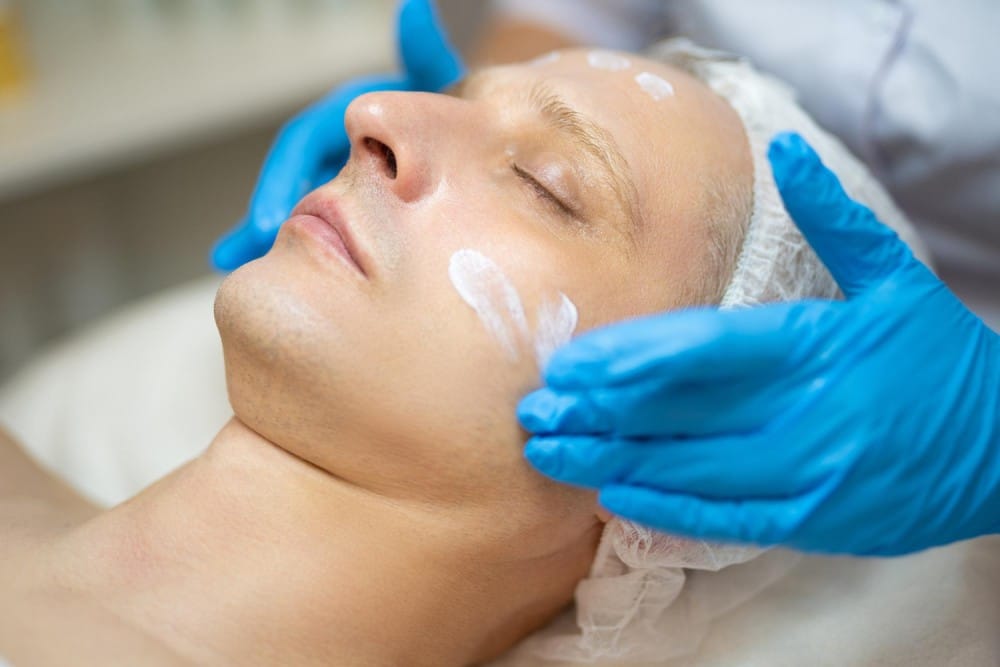
Photodynamic Therapy is a sophisticated treatment that utilises a photosensitising agent, a specific type of light, and oxygen to create a reaction that selectively destroys abnormal cells, including precancerous and cancerous cells. The process begins with the application of a photosensitising cream, most commonly containing 5 aminolevulinic acid (5 ALA), to the target area of the skin. This cream is absorbed by the skin and preferentially accumulates in rapidly dividing cells, such as those found in sun damaged skin and early skin cancers.
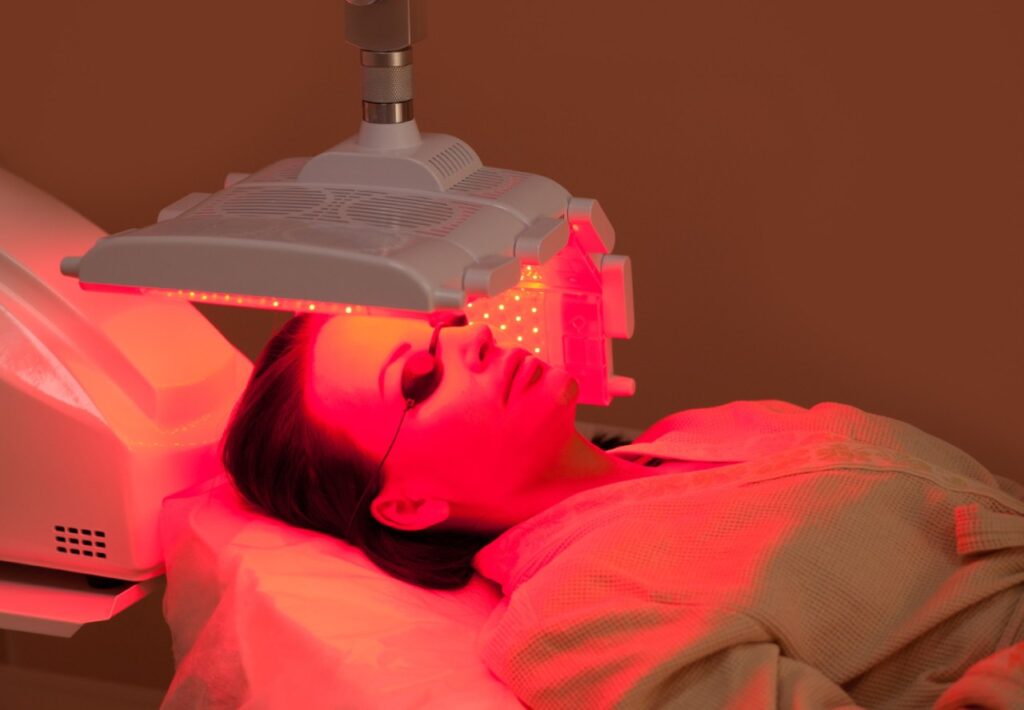
After an incubation period, during which the 5 ALA is converted into a light sensitive compound called protoporphyrin IX (PpIX), the treated area is exposed to a specific wavelength of light. This light activates the PpIX, triggering a chemical reaction that produces a reactive form of oxygen. This reactive oxygen, in turn, destroys the targeted abnormal cells, leaving the surrounding healthy tissue largely unaffected. This high degree of selectivity is one of the key advantages of PDT, as it allows for the treatment of widespread sun damage and multiple early skin cancers with minimal scarring and downtime.
| Stage of PDT | Description |
| Application | A photosensitising cream (5 ALA) is applied to the skin. |
| Incubation | The cream is left on the skin for a period of time to be absorbed by abnormal cells. |
| Activation | A specific wavelength of light is used to activate the photosensitiser. |
| Destruction | The activated photosensitiser destroys the targeted abnormal cells. |
The Science Behind 5 ALA and Light Activation
The effectiveness of PDT is grounded in the specific biochemical properties of 5 ALA and its interaction with light. Research has shown that the concentration of the photosensitising agent and the duration of the incubation period are critical factors in determining the treatment’s success. Studies have demonstrated a linear relationship between the incubation time of 5 ALA and the resulting skin fluorescence, which is an indicator of PpIX accumulation . Maximum fluorescence, and therefore maximum treatment efficacy, is typically achieved after approximately three hours of incubation with a 20% 5 ALA cream.
Recent advancements in formulation technology, such as the use of liposome encapsulated 5 ALA, have further optimised the treatment. Whilst liposomal formulations may show lower overall penetration, they provide a more uniform distribution of the photosensitiser, which can lead to more consistent treatment outcomes and a reduced risk of side effects. These formulations can also achieve therapeutic efficacy with significantly lower concentrations of 5 ALA, which enhances the safety profile of the treatment.
The choice of light source is another crucial element of PDT. Different wavelengths of light penetrate to different depths in the skin, and the ideal wavelength depends on the specific location and type of lesion being treated. Blue light (around 410 nm) is effective for superficial lesions, whilst red light (around 630 nm) can penetrate deeper into the skin, making it suitable for thicker lesions. The use of intense pulsed light (IPL) and lasers as light sources has also been explored, with studies showing that broadband illumination at high intensity may be more effective than a single wavelength for certain conditions .
How PDT Differs from Traditional Skin Cancer Treatments
Traditional treatments for skin cancer, such as surgical excision, often involve the removal of a significant amount of healthy tissue along with the cancerous lesion. Whilst effective, these procedures can result in scarring and may not be practical for treating large areas of sun damaged skin or multiple lesions. PDT, on the other hand, offers a non invasive alternative that can treat widespread areas of sun damage, a condition known as “field cancerisation,” with excellent cosmetic outcomes. This makes it an ideal choice for patients with multiple precancerous lesions or those who are concerned about the cosmetic appearance of the treated area.
Furthermore, PDT can be repeated as necessary to treat new lesions or to maintain the health of the skin. This is in contrast to surgery, which can become increasingly difficult and disfiguring with repeated procedures. The ability to retreat areas of the skin with PDT makes it a valuable tool for the long term management of sun damage and the prevention of skin cancer.
Who is a Good Candidate for PDT?
PDT is an excellent treatment option for individuals with a history of sun exposure and those who have been diagnosed with precancerous lesions such as actinic keratosis, or superficial skin cancers like basal cell carcinoma and Bowen’s disease. It is particularly well suited for patients with multiple lesions or those with lesions in cosmetically sensitive areas, such as the face, where surgery might result in significant scarring. A thorough consultation with a qualified cosmetic physician or dermatologist is essential to determine if PDT is the right treatment for you. During this consultation, your skin will be assessed, and your medical history will be reviewed to ensure that you are a suitable candidate for the procedure.
What to Expect During and After Treatment
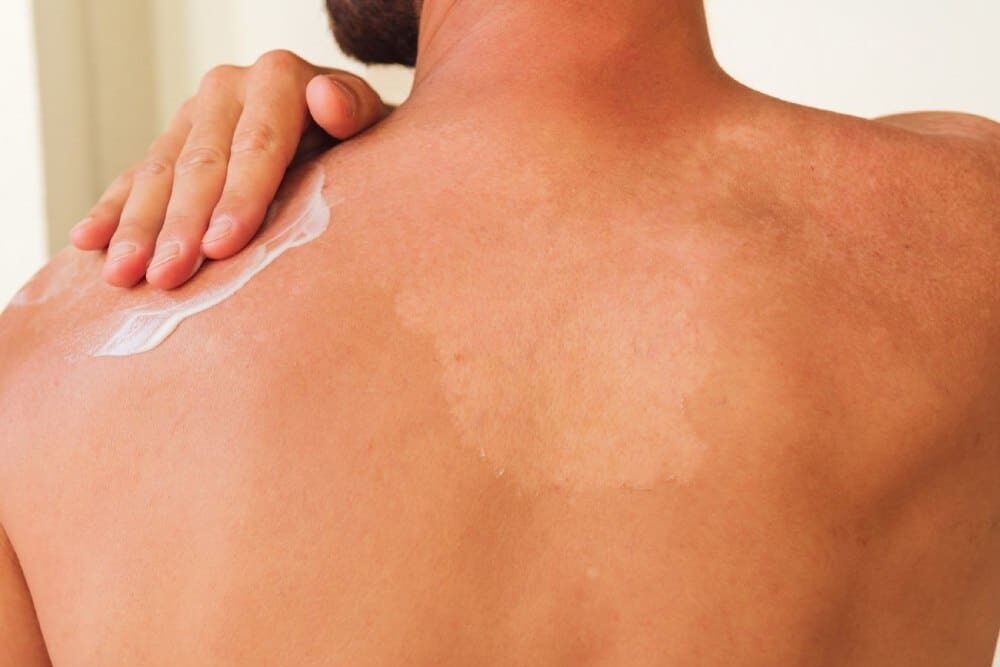
The PDT procedure is typically well tolerated, with most patients experiencing only mild to moderate discomfort during the light activation phase. After the treatment, the skin will appear red and may be slightly swollen, similar to a sunburn. This is a normal reaction and indicates that the treatment has been effective. The redness and swelling will usually subside within a few days, and the treated skin will then begin to peel, revealing fresh, healthy skin underneath. It is crucial to avoid sun exposure for at least 48 hours after the treatment, as the skin will be highly sensitive to light.
Real Clinical Outcomes from Research
Clinical studies have consistently demonstrated the high efficacy of PDT in treating precancerous lesions and superficial skin cancers. For example, a study on the use of PDT with intense pulsed light for actinic keratosis showed that 50% of lesions had complete clinical clearance after a single treatment, with 42% showing complete resolution on histological examination . Another comprehensive review of PDT for superficial sun damage highlighted its effectiveness for actinic keratosis, superficial basal cell carcinoma, and Bowen’s disease . These studies, and many others like them, provide strong evidence for the role of PDT as a powerful tool in the fight against skin cancer.
Why PDT is Gaining Popularity in Australia
Given Australia’s high rates of skin cancer, there is a growing demand for effective, non invasive treatments that can prevent the development of this disease. PDT meets this demand by providing a safe and effective way to treat sun damaged skin and prevent the progression to more serious forms of skin cancer. Its excellent cosmetic outcomes and minimal downtime make it an attractive option for many Australians who want to maintain their skin’s health without significant disruption to their lives. As our understanding of the science behind PDT continues to grow, so too will its role in the prevention and treatment of skin cancer in Australia and around the world.
At ISO Skin Cancer & Laser Clinic, we are proud to offer our patients the latest, evidence based treatments for skin cancer prevention. If you are concerned about your skin’s health or would like to learn more about Photodynamic Therapy, we encourage you to schedule a consultation with one of our experienced cosmetic physicians.